







This article helps founders, managers, and business owners in Egypt choose the right web hosting setup based on website type, traffic, security needs, uptime expectations, business continuity, technical support, and future growth plans.
Choosing web hosting for your business in Egypt should not be treated as a small technical purchase. The hosting environment behind your website, ecommerce store, platform, or internal system can directly affect speed, uptime, security, customer trust, SEO performance, and business continuity.
Many businesses choose hosting based on the lowest annual price, then discover later that the server is slow, support is weak, email delivery is unstable, backups are unclear, or the hosting plan cannot handle growth. At that point, the cost is no longer just hosting fees. It becomes lost leads, failed orders, frustrated customers, and technical risk.
The right hosting decision starts with one simple question: what does your business actually need the hosting to support?
A small company profile website, an ecommerce store, a custom web platform, a high-traffic content website, and an internal business system should not all be hosted the same way.
Before comparing hosting plans, you need to understand the role of the website or system in your business. Is it mainly a digital profile? Is it responsible for generating leads? Does it process online orders? Does it manage customers, employees, operations, bookings, payments, or internal data?
The more your website is connected to revenue, customer experience, or daily operations, the more serious your hosting decision becomes.
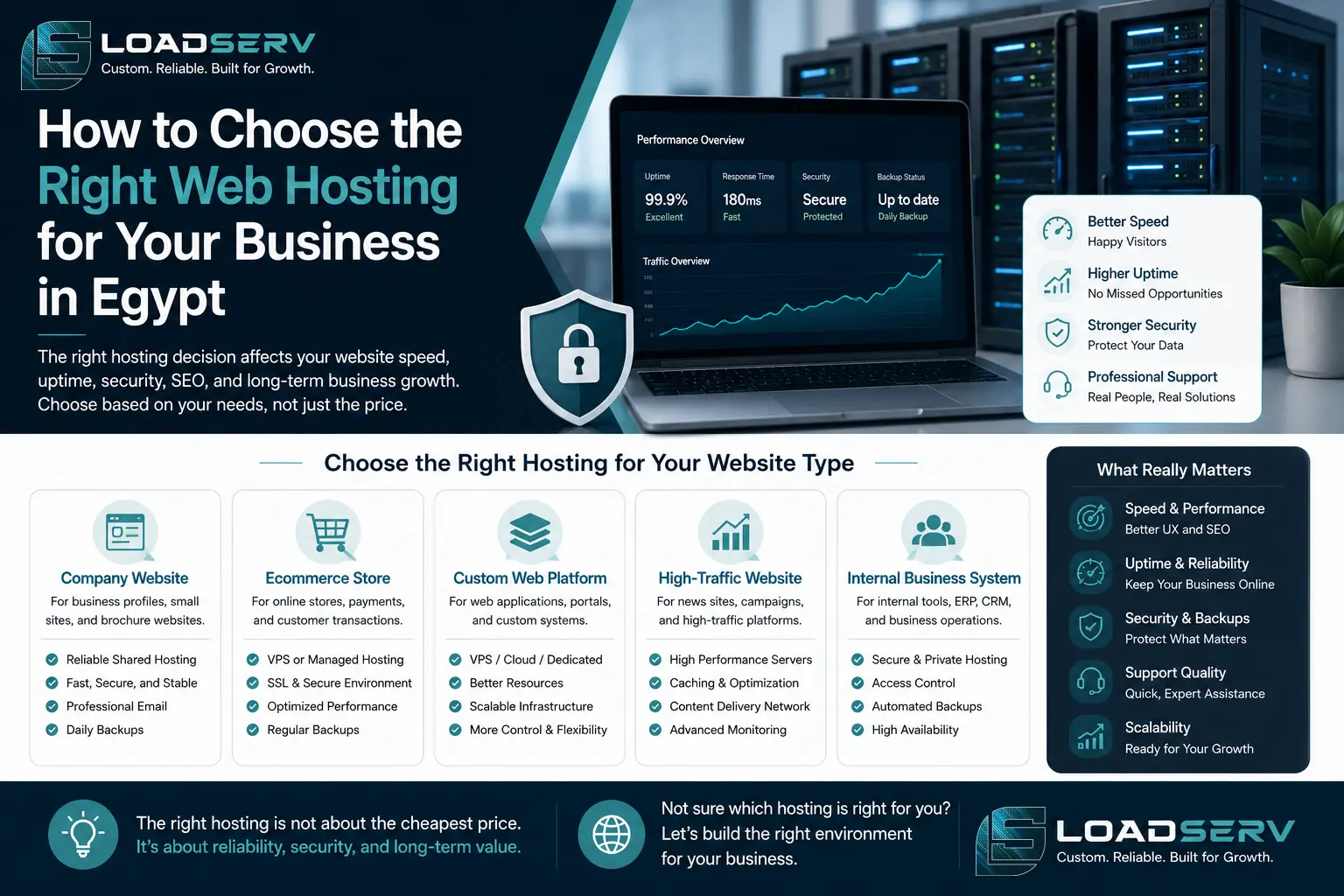
A basic brochure website may only need reliable shared hosting with good support and backups. An ecommerce store may need stronger performance, SSL, secure payment readiness, proper backups, and stable uptime. A custom platform or internal system may require VPS hosting, dedicated resources, stronger monitoring, access control, and a managed server environment.
A professional hosting partner should help you choose based on business risk, not just storage space and bandwidth numbers.
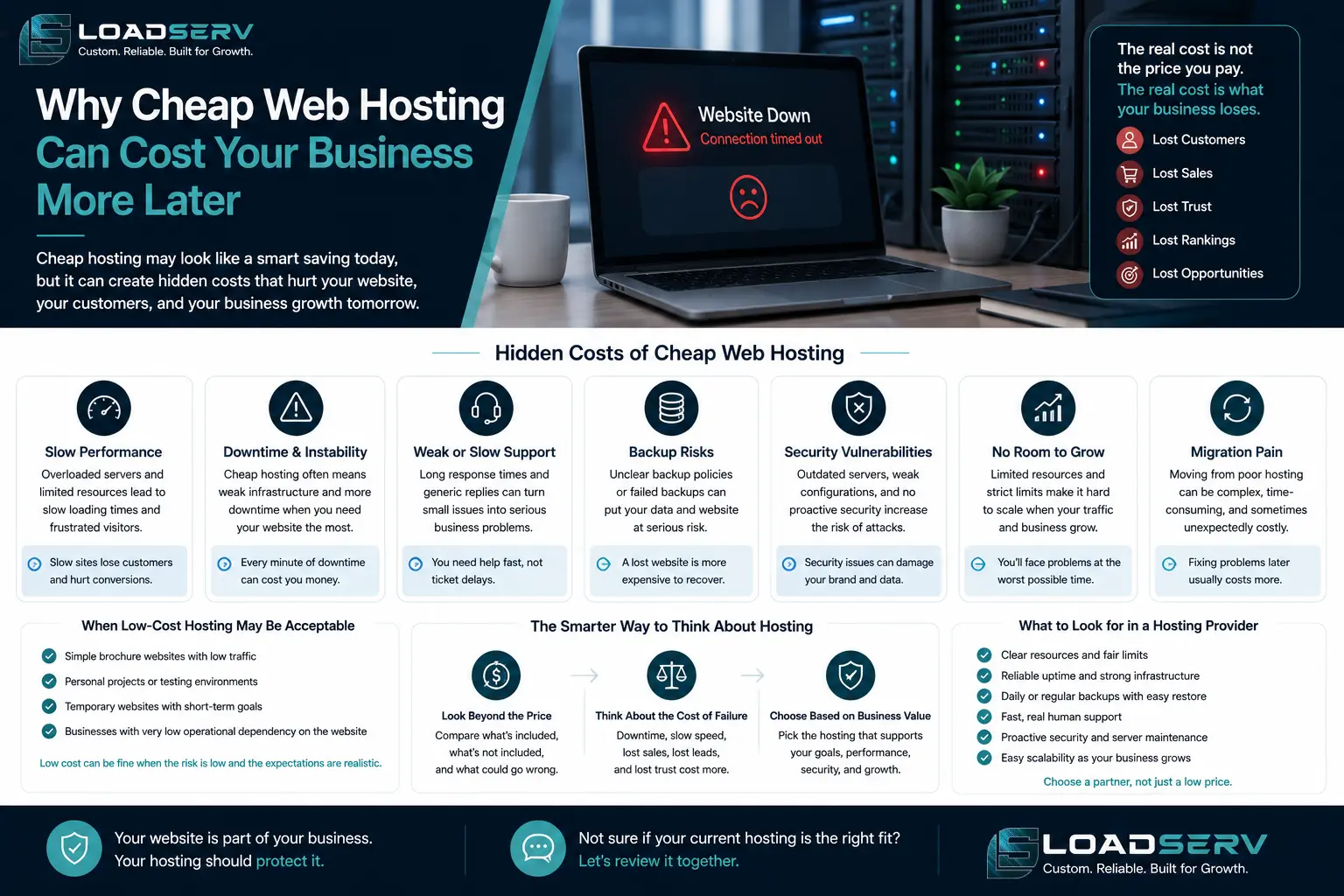
Cheap hosting is not always wrong. For a small, low-risk website with limited traffic and basic needs, an affordable hosting plan can be acceptable. The problem begins when a business chooses cheap hosting for a website or system that needs stability, speed, security, or operational reliability.
Very low-cost hosting often comes with shared resources, limited performance, overloaded servers, weak support, unclear backup policies, limited security handling, and slow issue resolution. These limitations may not appear on day one, but they usually become visible when traffic increases, the website grows, or something goes wrong.
If your website generates leads, handles sales, supports customers, or runs business operations, hosting should not be evaluated only by annual price. It should be evaluated by the cost of failure.
A few hours of downtime during an important campaign, slow loading during peak traffic, or losing recent data because backups were not properly configured can cost far more than choosing a better hosting setup from the beginning.
You do not need to become a server expert, but you should understand the basic hosting options before choosing a plan. Each type serves a different business level.
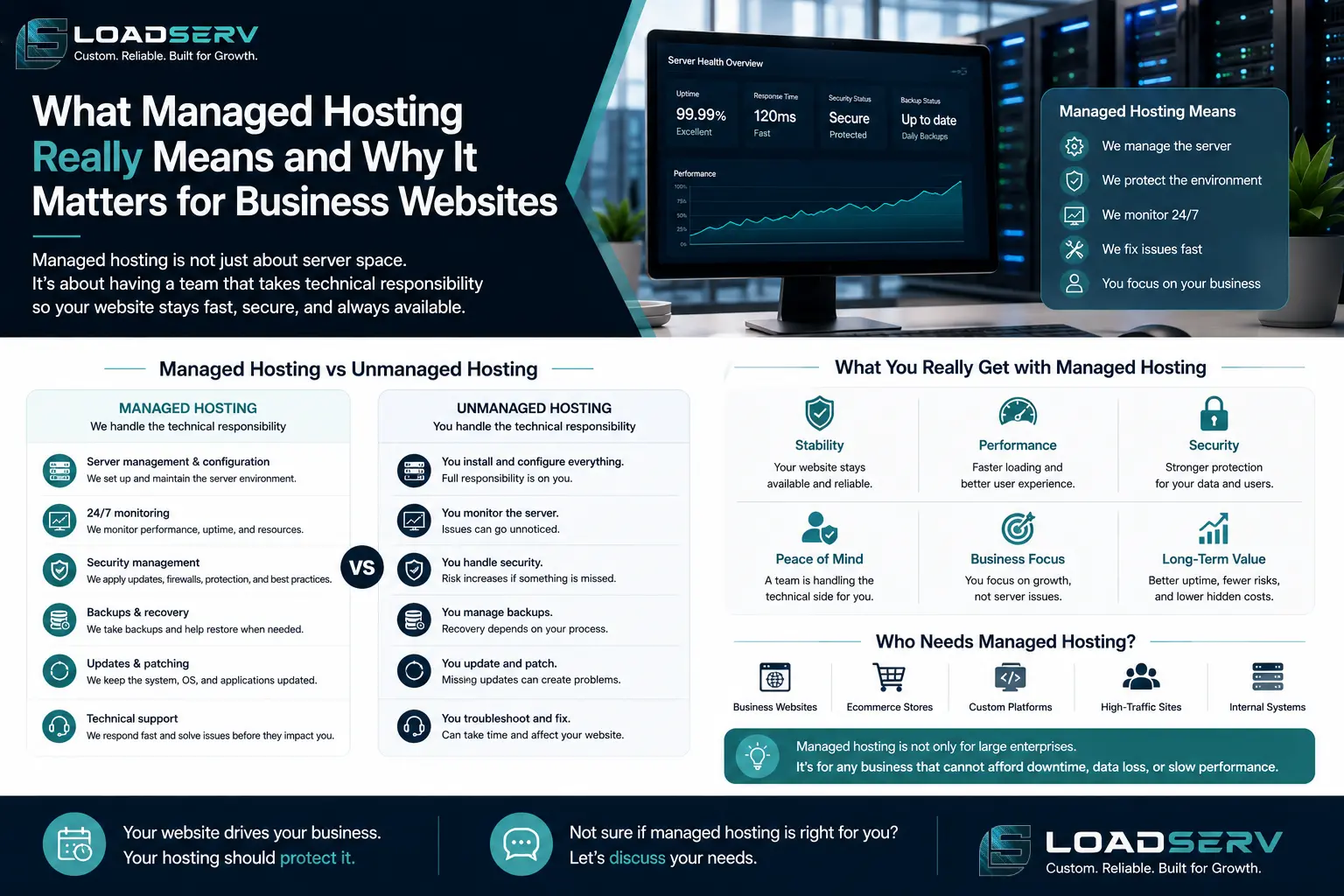
Some hosting options describe the infrastructure itself, while managed hosting describes how much of the technical environment is handled for you by the provider.
Shared hosting means your website is hosted on a server shared with other websites. It is usually suitable for small business websites, company profiles, landing pages, and low-traffic websites that do not need advanced server control.
The main advantage is cost efficiency. The main limitation is that performance and resource availability may be affected by the shared environment. It is a reasonable starting point for simple websites, but not ideal for heavy ecommerce, custom platforms, or business-critical systems.
VPS hosting gives your business dedicated virtual resources on a server. It offers more control, better performance, and stronger isolation than shared hosting.
A VPS is usually a better option for growing websites, ecommerce stores, custom web applications, business portals, and projects that need more reliable resources without moving directly to a full dedicated server.
Dedicated hosting gives your business an entire physical server. It is suitable for high-traffic websites, complex platforms, larger ecommerce operations, enterprise systems, or projects that require stronger performance, control, and infrastructure isolation.
It offers more power and flexibility, but it also requires proper server management, security hardening, monitoring, backup planning, and technical responsibility.
Managed hosting means the hosting provider does not only provide server space. They also help manage the environment, monitor performance, handle configurations, apply security practices, manage backups, and support technical issues.
For many businesses, managed hosting is the safer choice because the real value is not only in the server itself, but in the team responsible for keeping it stable.
The right hosting setup depends heavily on what you are running. Choosing the same hosting plan for every type of website is one of the most common mistakes.
A corporate website that presents services, company information, contact forms, and basic pages may not need a complex server setup. What matters most is stability, speed, SSL, email reliability, backups, and responsive support.
If your website is part of your credibility and lead generation, it still deserves professional hosting, even if the technical load is not heavy.
Ecommerce hosting requires more care because slow performance, downtime, failed checkout, or security problems can directly affect sales.
An ecommerce store needs stable resources, secure configuration, SSL, regular backups, payment gateway readiness, database performance, and quick support when issues happen. If the store is growing, VPS or managed hosting is usually more suitable than basic shared hosting.
A custom platform may include users, dashboards, roles, transactions, reports, integrations, APIs, and business logic. These systems need hosting that supports the application architecture properly.
In many cases, a custom platform should be hosted on a VPS, dedicated server, or managed environment where resources, security, configuration, and scaling can be controlled.
A high-traffic website needs hosting that can handle visitor spikes, content delivery, database load, caching, and performance optimization. This is especially important for media websites, campaign landing pages, educational platforms, and content-heavy websites.
The hosting plan should be selected based on real traffic expectations, not only current traffic.
Internal systems often require more attention to access control, data protection, uptime, backups, and controlled user access. Even if the number of users is not huge, the business dependency may be high.
For systems that support daily operations, hosting should be chosen based on continuity and security, not public visibility alone.
Website speed is not just a technical metric. It affects user experience, conversion, search visibility, campaign performance, and brand perception.
A slow website can make visitors leave before they read your offer, submit a form, complete a purchase, or trust your business. For ecommerce and lead-generation websites, performance problems can turn directly into lost revenue.
Hosting plays a major role in performance. Server resources, configuration, caching, database performance, storage type, network quality, and management practices all affect how fast and stable your website feels to users.
If your business invests in web development, SEO, or paid campaigns, weak hosting can reduce the value of that investment.
Uptime is not just a percentage in a hosting plan. It is about whether customers can reach your business when they need to.
For a simple website, downtime may be inconvenient. For an ecommerce store, booking platform, client portal, or internal business system, downtime can interrupt sales, operations, support, and customer trust.
A serious hosting setup should consider monitoring, backups, server health, update management, security handling, and recovery planning. The goal is not only to host the website, but to reduce the risk of disruption.
Businesses should ask: What happens if the website goes down? Who responds? How fast? Are backups available? How often are they taken? Can the website be restored quickly?
If your website handles forms, user accounts, customer data, payments, private documents, or internal business information, security must be part of the hosting decision.
Secure hosting should include proper server configuration, SSL, access control, malware prevention, firewall practices, software updates, backup strategy, and controlled permissions. Security is not only about installing one tool. It is about managing the environment responsibly.
The level of security required depends on the type of website or system. A simple website may need basic protection. A platform with user accounts, payment flows, or confidential data needs stronger controls.
A professional hosting partner should be able to explain what protection is included, what your business is responsible for, and what requires additional configuration.
Hosting problems usually become urgent when they happen. A website goes down, emails stop working, a payment page fails, a server reaches its limit, or a migration creates unexpected issues. In these moments, support quality matters more than the hosting plan name.
Many businesses only evaluate storage, bandwidth, and price. But the real difference between hosting providers often appears during problems.
Good support should be responsive, technically capable, clear in communication, and able to diagnose the real issue instead of giving generic replies.
If your website is important to your business, you need hosting managed by people who understand both servers and business urgency.
Your hosting setup should match your current needs, but it should not block your future growth. A website may start small, then later add ecommerce, online booking, customer accounts, content sections, integrations, or higher traffic from SEO and advertising campaigns.
A good hosting decision should make upgrades possible without unnecessary disruption. Moving from shared hosting to VPS, increasing resources, separating email, improving backups, or optimizing performance should be part of the growth conversation.
The goal is not to overpay for infrastructure you do not need today. The goal is to choose a setup that can grow with your business when needed.
Comparing hosting offers only by price can be misleading. A proper comparison should look at what is actually included and what happens when your business needs help.
When reviewing hosting offers, check the server type, resource limits, backup policy, SSL availability, email support, security practices, support response, migration assistance, monitoring, upgrade options, and whether the hosting is managed or unmanaged.
You should also ask whether the provider understands the type of website you are running. Hosting a corporate website is not the same as hosting an ecommerce store, Laravel platform, internal system, or high-traffic website.
A strong hosting offer should make the operational responsibility clear. It should explain what is included, what is excluded, what support covers, and how the setup can evolve as your business grows.
You can review our pricing approach to understand how LoadServ thinks about cost, technical responsibility, quality, and long-term value.
LoadServ does not treat hosting as a disconnected technical add-on. We look at hosting as part of the business environment that supports your website, platform, ecommerce store, or internal system.
Through our web hosting service, we help businesses choose the right hosting setup based on website type, traffic expectations, security needs, uptime importance, growth plans, and technical management requirements.
Our strength is not only providing hosting space. It is understanding what the business is running, what risks need to be reduced, and what level of support the project requires. This is especially important for businesses that depend on their website or web system as a serious operational or commercial asset.
If your project is still in planning or development, our business consulting service can also help you define the right digital and hosting direction before committing to a setup that may be too weak or unnecessarily oversized.
The right web hosting for your business in Egypt depends on what your website or system does, how much your business depends on it, how much traffic it receives, what level of security it needs, and how much growth you expect.
A simple website may need a simple but reliable hosting setup. An ecommerce store, custom platform, or internal system needs stronger planning, better resources, managed support, and a clearer continuity strategy.
Hosting is not just where your website lives. It is the environment that protects its speed, uptime, security, and business reliability.
If you are not sure which hosting setup is right for your business, contact LoadServ and we will help you choose based on real needs, not guesswork.



Share your website type, traffic expectations, business needs, and growth plans with LoadServ, and we will help you choose a reliable hosting setup that supports performance, security, uptime, and long-term business continuity.